Frequently Asked Questions (FAQs) about
World famous Himroo
1. Is Himroo woven on powerlooms authentic Himroo? Yes. Authenticity in Himroo comes from the ancestral weave structure—the intricate extra-weft motif interlacing silk and cotton—not strictly the manual movement of a treadle. Our family has preserved our original ancestral designs and weaving parameters while adopting modern, wide-width looms. This ensures you receive 100% genuine Himroo motifs with precise pattern registration, enhanced fabric durability, and flawless finish.
2. Why do some claim only "Pit and Paga" looms produce genuine Himroo? Claims that only pit and paga handlooms produce "true" Himroo are marketing narratives that ignore the natural evolution of textile engineering. While pit looms were historically used due to primitive equipment limits, they restrict the weaver to narrow fabric widths (typically 36 to 45 inches) and slower production. By translating our traditional ancestral techniques onto wider-width looms, we preserve the exact heritage motif structures while overcoming historical width restrictions.
3. What are the advantages of wider-width Himroo fabric compared to traditional pit-loom fabric?Traditional handloom/pit-woven Himroo is restricted to narrow dimensions, making it suitable mainly for smaller items like shawls, stoles, or pieced-together garments. Our wider-width Himroo fabric offers distinct functional benefits: Seamless Applications: Allows continuous creation of wide upholstery, heavy drapes, bedspreads, and couture garments without awkward joining seams.Structural Consistency: Provides uniform tension across large fabric surfaces, preventing sagging or distortion over time.Design Scale: Enables larger, uninterrupted historic motifs that cannot fit on narrow handlooms.
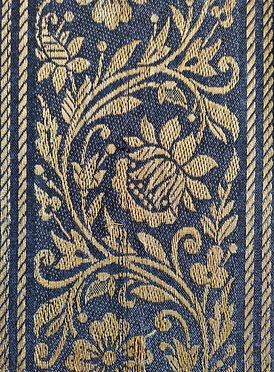
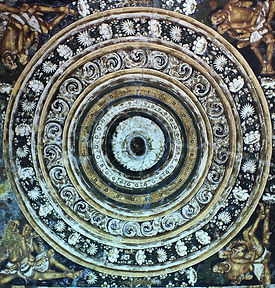
4. How does your weaving process preserve our ancestral heritage? Weaving is a mathematical and artistic process governed by warp-weft ratios, thread density, and pattern matrices. Our facility uses the exact traditional design grids and intricate historic motifs passed down through generations in our family, including: * Ajanta Floral & Geometric Patterns: Classic lotus blooms, creepers (bel), and vine lattices inspired by the famous Ajanta cave murals. * Geometrical & Persian Motifs: Traditional Gul-daudi (chrysanthemum), Paan (betel leaf), and interlocking diamond lattices (Jali work). * Classic Paisley (Kalka/Keri): Iconic royal teardrop motifs and mango patterns that define traditional Himroo shawls. * Architectural & Royal Borders: Elaborate Kinar (borders) featuring geometric repeat patterns derived from Deogiri Fort and Mughal architectural motifs. We have simply scaled the mechanisms to wider-width looms, keeping the soul, cultural heritage, and tactile feel of these authentic Aurangabad Himroo designs completely intact.
5. Can wider-width Himroo fabric be used for modern interior design and fashion? Absolutely. Traditional narrow Himroo fabrics often required stitching multiple panels together for larger uses. Our wide-format Himroo is tailor-made for: * Luxury interior upholstery (sofas, armchairs, headboards) * Seamless architectural drapery and wall coverings * Modern high-fashion coats, sherwanis, and fashion accesories like Ties, Clutches, Bags and waistcoats. * Large-scale home textiles (seamless king/queen bedspreads)
6. How does your product compare in quality and price to traditional handloom Himroo? While handlooms suffer from irregular weave tension and narrow width limitations, our advanced wider looms deliver consistent thread tension, superior colorfastness, and higher structural strength. Additionally, mechanical efficiency reduces labor hours, allowing us to offer authentic, high-grade Himroo at far more accessible prices per meter without compromising the fabric's rich heritage aesthetic.